Adewale AA.
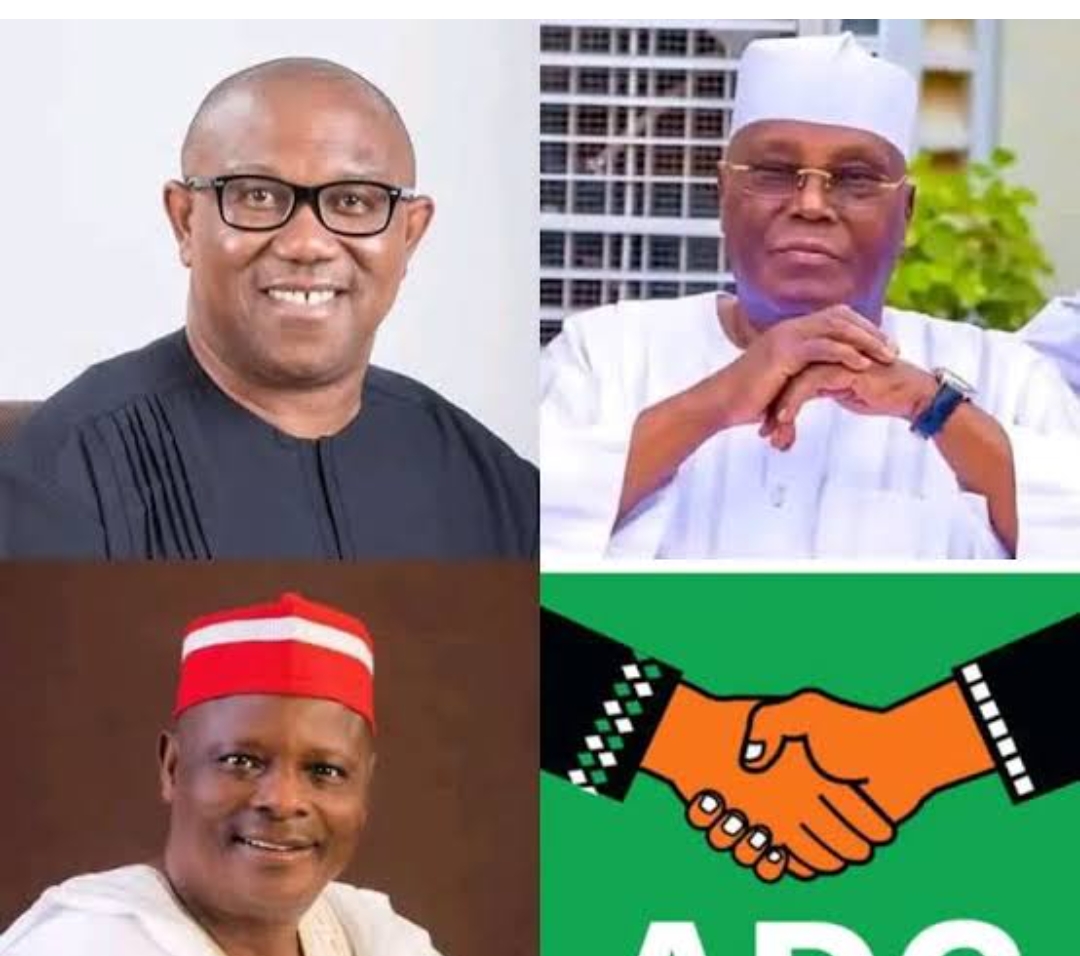
Nigeria’s main opposition coalition is facing deepening internal turmoil ahead of the 2027 general elections, raising fresh concerns about its ability to mount a strong challenge against the ruling party.
The opposition bloc, largely built around the African Democratic Congress, was initially formed as a united front by prominent political figures including Peter Obi, Atiku Abubakar, and Rabiu Kwankwaso.
The coalition had been projected as a formidable force capable of unseating the ruling All Progressives Congress in 2027.
However, recent developments suggest that the alliance is now fracturing under the weight of internal disputes, power struggles, and looming defections. At the heart of the crisis is a fierce contest over the party’s presidential ticket and control of its structure. Reports indicate a growing rift between key figures, particularly between camps aligned with Obi and Kwankwaso on one side, and allies of Atiku on the other.
The disagreement has reportedly escalated into a broader leadership crisis, with multiple factions laying claim to authority within the party. Legal battles have further complicated the situation, as court cases and internal disputes continue to stall party activities and weaken coordination among members.
Adding to the instability are strong indications that some top members may abandon the party altogether. Reports suggest that both Obi and Kwankwaso are considering, or may have concluded plans, to exit the ADC amid dissatisfaction with the internal crisis. Sources within the opposition say discussions are already underway to align with alternative political platforms, a move that could significantly weaken the coalition’s strength ahead of the elections.
Political analysts warn that the unfolding disarray could undermine the opposition’s chances in 2027. The coalition was widely seen as the most viable platform to consolidate opposition forces and challenge President Bola Tinubu, but with internal cohesion deteriorating, observers fear the opposition may once again head into a general election divided—an outcome that has historically favoured the incumbent party.
With less than a year to the polls, the future of the opposition coalition remains uncertain. While some leaders continue to call for unity, others appear to be charting independent political paths. Unless the crisis is resolved quickly, the opposition risks losing the momentum it once built as a united alternative, potentially reshaping the dynamics of Nigeria’s 2027 presidential race.